
May 2, 2026
Field Note #84
Avraham Cohen, PhD, RCC-ACS, CCC
(604) 313 8423
(In this time of AI, e-mail, and texting, talking to a real person is often hard to come by. If you want to speak with me directly, do phone. I will pick up and talk to you unless I am in a session, or otherwise temporarily unavailable. Please leave a message. I will get back to you ASAP.
Of course, if text or email is preferable for you, by all means, use these forms.)
The Beginning
of Life
on
Earth
Part 2
https://stablediffusionweb.com/image/23870172-ugly-duckling-transformation-to-swan
Audio Version:
See two interviews with me here:
https://www.youtube.com/watch?v=7qG2vulygGWU&1=165s
https://www.youtube.com/watch?v=yu-A-AOeNzl&t=1121s
Quotes of note:
The privilege of a lifetime is to become who you truly are.
—C.G. Jung
Broken crayons still color.
—Anonymous
The journey itself is my home.
—Kazuo Ishiguro
The future belongs to those who believe in the beauty of their dreams.
—Eleanor Roosevelt
Your spiritual awakening is not about becoming someone else, but about being who you really are.
—Claire Morrison
As promised in my previous Field Note,
(April 2, 2026, https://dravrahamcohen.com/field-notes/the-beginning-of-life-on-earth-part-1/)
this month I will offer some salient points about my personal history as an example that can illustrate the kind of work I have in mind with bonding and relational experience. I hope you will find the illustration to be illuminating for your own inner work reflections. As well, I will include some experiential practice for you in the service of your increased connection to your deepest sense of self and in the service of facilitating and enhancing connection in all your relationships.
Let’s start with a Fairy Tale:
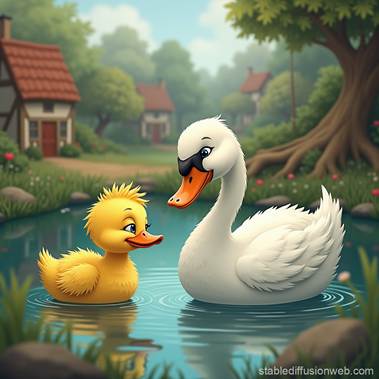
The Ugly Duckling[1]
Once upon a time there was a beautiful inland lake in a little-known part of the world. A mother duck gives birth to a brood of baby ducklings. One of them is not covered in yellow feathers and is not cute like all her little siblings. She is bigger, more awkward, and her feathers are a kind of grey colour. As she grows up, she suffers a subtle and not so subtle form of ostracism. Her life is hard and she does not feel happy as most of her siblings seem to. She is different and she finds this very difficult. Her mother does her best to relate to her and make sure she gets enough to eat and is kept safe from whatever dangers and difficulties the world presents. Her life is not easy. One day she is off on her own and she sees a group of youngsters that are sort of like her but not different. They are white and very graceful, and she sees their mother who is big and very beautiful. She happens to notice her own reflection in the water at that moment, and she realizes that she looks just like them. She paddles over and she is greeted warmly and she realizes that she is not a duck, that she is a swan and that she has always been a swan. She feels she has found herself and her place. She begins to understand that her attempts to be what she never was and to belong to a club, which she did not even want to be a member of was a very painful part of her life’s journey. She is now on the path of discovering and becoming what she always was and becoming her dream self.
Some Questions for the Little Duck, Her Siblings, the Mother, and Some Comment from the Cosmos
The Little Duck Wonders:
Why am I different from everyone else? What is wrong with me? Why am I afflicted with this problem? How can I fit in? Can I change myself sufficiently? I am very upset and angry. I don’t want to be different. Wait . . . I do want to be different!
The Little Duck’s Siblings:
She is weird. We don’t like her. Why doesn’t she go somewhere else? Maybe we should be nice to her and accept her as she is? How do we do this? What will other Ducky groups think of us having this weirdo in our group? Should we just pretend nothing unusual is going on?
The Mother:
How do I deal with all my ducklings lovingly, fairly, and also help them learn about how to look after each other? From where do I get enough energy and resources to supply food and protection for everyone, and help them learn how to be together in the best possible ways?
What shall I do about my Dark thoughts, like: I wish this weird Ducky had not shown up; I wish I didn’t have any ducklings; it’s so much work. Of course, they are so sweet and cute, and I love them! Or do I really love them? How can I have such conflicting and contradictory thoughts and feelings? am confused about my idea of my self as a good, and even Great Mother who can look after everyone. I long to go back to my previous life. Where is my partner? He is not here to help! My dark thought, “He is at the bar!” My better thought is “He is working hard to provide the resources we need to keep home and hearth together, and to bring food for us.”
The Cosmos:
You are all an infinitesimally small part of everything and yet just like every other part you are integral to the whole.
Some Background
I spent a good part of my early years trying to be a duck, and eventually I knew I was not a duck and that I did not want to be what I was not. I wanted to be who I was and do what I was always meant to do.
As you read my story, see if my story is in any way analogous to your own story, even while it is different in the details. Knowing some facts of my life may or may not be of interest to you, but the main purpose of my sharing is in the hopes that you see more clearly by opening further the doors into your own inner word, and to facilitate your own re/search into your ‘original’ self and its re-emergence over time. In particular, perhaps notice the patterns in my life that may well represent your own patterns.
In other words, I offer you a window into a way of seeing and understanding your own experiences and the effects of the deeply etched patterns represented by the early events of loss or omission that are described. As you come to know the narrative and patterns of some key inflection points in my life, perhaps you can reflect carefully and closely on your own experiences.
Notice the beginnings of any imbalances between thinking, body sensation, and emotion. As well, notice the difference between what you know in your inner world and what you show to the outer world. Reflect on what the events in your life might have done to the surges or depletion of your vitality, your life energy, your core self, your soul (whatever this might mean to you), and notice what brings forth strong emotions and further reflections.
My Story
I was born during World War II. My father was 27. He was exempt from the Canadian military draft which drew a line at 26. However, he enlisted in the Royal Canadian Airforce and served as a navigator. I asked him, “Why did you do that?” He responded, “I wanted to help defeat those Nazi bastards!”
I believe this message and particularly his tone infiltrated my consciousness deeply and accounts at least in part for my life-long commitment to what I always understood to be fair, honest, and just. As well, this decision meant that my mother became, functionally, a single parent to me—her first-born. This was her characterization of the circumstances. She was not complaining. She was just stating a fact. And she may even have been proud of the fact that her taking care of me as a single mother was what she could do to help defeat a totalitarian and rabidly antisemitic Nazi Germany. It was personal for our Jewish family, and this statement does not negate the reality of the millions of others who suffered and died in WWII at the hands of the Nazi regime.
For the first three years of my life, I almost never saw my father. My mother told me that when my father came home after the war ended, I cried at the sight of him. He was a stranger to me. I was frightened by his presence. Eventually my brother was born. I was 4 ½ at the time. Shortly after this, we moved 4351 kms across the country from Toronto to Vancouver. All this may be seen as no big deal. I will describe for you the effects on me and my development related to these so-called normal experiences.
My parents had made the apparently ‘good’ decision to move to Vancouver on the West Coast of Canada. My father was a manufacturer’s representative for a Montreal based firm for Western Canada. He could be home more if we lived in Vancouver rather than if we stayed in Toronto. As a result, the family ‘village’ in which my family was embedded in Toronto, with our large extended family, was mostly gone. My Mom was less of a single mother at that point: yet, still, she lived like a single mother in many ways. My Dad was still away, albeit less than before, building on the pattern that had been laid down most strongly during the War with his absence.
My Dad was not atypical as a male of that time. He did not know how to participate fully as a Father. He was quite a good-hearted person with good intentions. My Mother who had grown up on Queen Street East in Toronto, a poor part of town, was the only girl. She had four brothers. What was in the psychic Shadows was the ingested pattern of being on her own and being a caregiver to me. In fact, the reality of my Father’s work did still keep him away from home for fairly extensive periods of time. My family became a nuclear family, a very small one.
My brother’s birth was another shock wave to my already shaken little system. As a new-born he required a lot of time and attention from my mother. I was left much more on my own at the age of four-and-half than I needed. There was no extended family to fill in the gaps. Perhaps it is not surprising that, as we grew up, I always viewed my brother as my mother’s favorite and, therefore, my competitor for our mother’s attention, she denied this favoritism regularly and consistently. I was not convinced!
The next event that occurred was the move that I mentioned above. We did have a quite large extended family, which now became a rather faded memory. I will share here a story that I have shared earlier in my Field Notes as I feel it is an excellent example in terms of my thesis in this Note. A most significant loss was my little friend who lived across the street, Vanda. I missed her terribly. As well, Mr. McDougal and his wife were our next-door neighbours. Mr. McDougal was always very friendly and kind to me. I also recall as we were in the last stage of moving out seeing one of my favorite toys in the middle of the living room floor. I told my father about it and asked, “Will the movers pack it and bring it?” He assured me that it would arrive safely in Vancouver. You know how this ends.
I will add one more significant early life event that posed an existential threat for me. In my early adolescence, I suffered a serious, although not life-threatening illness. At that stage of my life, I was fearful that I was going to die, and nobody was telling me! At an early stage of my life, the possibility of non-existence became very real!
All these events show a pattern that would not be conventionally identified as profoundly traumatic. However, upon reflection, I would say that all this experience amounts to living with the effects of ongoing isolation from early days. So, no matter how it is labelled, there is something going on in the zone of what Mark Epstein refers to as “everyday trauma” (Epstein, 2013).
My family eventually moved into a quite large house with a magnificent view of the North Shore mountains and the ocean. I liked our house and even now as I write this I have a very sweet and warm feeling. Our new neighbourhood was at that time mostly white, Anglo-Saxon. It was not what I was used to. By happenstance, our next-door neighbours were Jewish and their daughter, Sharon, became our babysitter. Living in this neighbourhood was the beginning point for me of consciousness about my differentness.
I vaguely recognized that I was not quite the same as the other kids in the neighbourhood who were a mixture of working class and middle-class background. I was acutely aware at Christmas time that our house was dark, and all my friends’ houses were decorated with lights, Santa Claus,’ and Christmas trees. I knew we, and especially me, were different. As a young boy, a pre-adolescent young boy, I could not even articulate this otherness that I was, not to anyone, not even to myself. I just had a strange feeling that I couldn’t articulate. There was no mature adult who could crouch down to my height and help me make sense of what I was feeling!
I noticed other differences, too. My interests were in books. I was book-smart in school at a time when being a star in school ground sports was the preferred way to popularity, or so it seemed to me. When I played with the neighbourhood children, I always ‘felt’ somehow ‘less than and separate from.’
In my late teens and early 20’s I was enrolled at the University of British Columbia as an undergraduate. I was struggling to find my way and my place. I decided in my second year that perhaps my problems would be solved if I joined a fraternity. I rushed (checked out) three different fraternities. To my great surprise they all wanted me. I chose one and was on probation for the first term with an older member as my mentor. At the end of the first term, we met, and he asked me what I thought about becoming a full member. I told him that I had observed a lot of things at social gatherings that I had witnessed at many such gatherings outside the fraternity; lots of laughter about things that I didn’t find too funny, lots of alcohol, lots of encounters with the opposite sex and talk about such encounters, and so on. I told him that I didn’t see the point of paying dues to belong to the fraternity to engage in what I had previously had access to for free and most of which I was increasingly uninterested. I told him I was going to quit. He tried to talk me out of this. When he saw he was not making any headway with me, he surprisingly said, “You’re smart!”
This was the beginning of a turning point for me. I began to look for other ways and places to be.
I began to see my life and views as profoundly separate from most of the consensus world around me, along with an increasing recognition of my own otherness. I began to realize that I had been seeing the world through a lens in my own consciousness that distorted what I was seeing. The lens I had was an outgrowth of my family background that was a microcosm of the larger culture, the shape of the contemporary world, and the collective unconscious and mythologies. I did not realize, then, that such a lens existed in most everyone. I was somehow vaguely aware that this lens existed and that my task was to change myself, my consciousness, and my ways of being, all in the service of contributing what I could to my immediate community and whatever bits I could contribute to the larger culture, and the cosmos. This was the precursor to a life-long fascination with people, relationships, finding my purpose in life, and pursuing the answers to eternal questions, ‘What is it all about, where did it all come from, where is it all going, where am I going, who am I, and how do I connect most meaningfully to others?’ That is, once I came to the realization that most of those around me were also estranged, namely, strangers in a strange land (to borrow from the title of Robert Heinlein’s 1981 classic science fiction novel, Stranger in a Strange Land).
In the world of the arts, along with science fiction, I was always fascinated with film and particularly the characters and relationships that were portrayed as images of the world, and, as I have come to see, initiators in creating the unconscious inner world through which we see the world and without consciousness of this world the outcome is the view that this inner world construct is actually what is out there, which it most definitely is not! My experience has shed light for me regarding my life-long search for meaning and for meaningful connection, and in coming to know more of my most authentic self, and the ongoing healing and integration of my inner and outer selves.
This experience of separateness certainly speaks to my sense of a division between me and the mainstream/consensus culture and accounts for my associated early life feelings of alienation and anomie. Since my early days of wondering about myself, I have become increasingly aware that my experience was not so unusual although perhaps my awareness and reaction to this was not usual.
I increasingly understood that my own unique experience reflected the experience of most people, and on the largest scale, a mirror image of the world and its torturous, brutal, and simultaneously amazing history.
Next, I will offer you an inner work exercise to aid your exploration of your own inner world and in the service of exploring questions about your own identity, place, and purpose in the world.
Inner Work Exercise
Many who come to see me for in-depth inner work have a sense of isolation that manifests as a felt lacuna of connection along with a lack of meaning in their life, or to put this in another way, “Is this it? Is this all there is?” Now, what is conventionally named as a mid-life crisis or realization of ‘something missing’ seems to be hitting an increasingly large demographic, including many who are much younger than mid-life.
Here is the inner work exercise for you:
Turn your gaze inward. Look for your Self, or whatever term fits for you. Notice your attitude towards this possibility and subsequently towards your Self, that entity that refers to the core of your being. Observe your Self. What stands out most immediately to you? What thoughts do you have? What physical sensations are apparent and what is their location in your body? What emotions do you notice? What behaviors are manifesting or pushing to happen? What sense of interconnection do you have about these dimensions in your inner world? Focus on noticing what is there and watch for any tendencies to judge or evaluate what you notice. The purpose is to use your awareness in the moment and obtain a snapshot of your inner world awareness and experience, and as the seeker of your Self.
What was your experience of being the observer? Did you glimpse your inner core Self? How ‘human’ was this observing self towards what it found, and did you have any sight of your deepest Self?
Notice your physical state the location and details of these states in your body. Along with this, note your emotional experience, your behavior or lack thereof, your life force energy.
What was the sense of connection/disconnection between your inner and outer selves? This connection or disconnection is a key picture of how whole you are. Where you are on the continuum of awareness and unawareness is also key information for you to work with.
I don’t believe that anyone can tell you the ‘right’ answers. I recommend that you seek ways to facilitate the possibility of you finding more of a way of coming to know these selves and their ways towards integration.
The inter-relationship between the elements of thinking, sensation, emotion, and action is crucial. The common confusion about these terms and their meaning and the experience of them is legion. Most people that I work with have never learned to actually feel their feelings. If a person can truly feel what they are feeling and stay with this and study it, they will learn how to more authentically be who they most authentically are. Most of what we call feeling is actually a quick jump from body sensation to thought and/or to action; all in the service of getting rid of the feeling, that is to not actually feel the feelings. Most of the world seems to be dominated by this acting out to relieve thediscomfort of feeling—any feeling at all. The world is not friendly to, or familiar with, body sensation and emotion even though language about this is commonly uttered and heard. As well the schism between your inner and outer Self is being cemented in place. Learning about this through your inner work leads to the possibility of what Jung called individuation, what I would suggest means wholeness, and is evidenced by increasing levels of peace and self-knowing. What lies beyond this level of integration is a deeper investigation and potential to explore beyond the Shadowy figures of Plato’s cave and into the deep mystery of creation and being.
Summarizing
The life-long developmental process of a human being has been the focus of this two-part Field Note, in particular, the development of ourselves and our children: how this can so easily go wrong in spite of very good intentions and much hard work aimed towards a good outcome. The further focus has been to give some idea of the rejoining with our core self, as Hui-neng the Sixth Zen Patriarch said, “What is your original face before you were born?” We can be on the path, living a life that puts us back towards our ‘original face,’ which happens to be a symbolic way of talking about becoming the Self that we were meant to be and which will certainly allow us to live a life of inner peace even while contending with a world that is full of trials and turbulence.
You may be wondering, what does this have to do with my everyday life problems? I suggest to you that addressing the issues identified in these two Field Notes is not a subject that has an end or the solution to many of life’s immediate problems. What I have attempted to provide is the possibility of entering ever deeper into the process of becoming more of who you are, which will facilitate being much calmer and clearer in the face of dimensions of life that I have characterized in my writing as “the difficult, the unwanted, and the horrible.”
Being closer to your ‘face before being born’ may actually put you in a place where many issues never even show up, where those that do, become more manageable in the inner world, or wherein you are better able to deal with the most extreme challenges that life offers.
At this time in history, many are working on learning how to breathe ‘under water,’ the acceptance of the reality that we are under water as truth may show clearly the true circumstances of our lives and, perhaps, the deeper meaning may become more apparent. None of what I am saying here is to diminish the pain with which many have been living. I believe that there is a possibility to grow our individual and collective consciousness and that the tiny pinpoints of light each of us represents will have a possibility over time—likely much time—to bring days and horizons filled with meaning, purpose, and aliveness.
Great appreciation to Heesoon for her most helpful and notable support with this Field Note.
Shalom to you all,
Avraham
PS In the next while, I am contemplating transitioning my Field Notes to include recordings of conversations with various therapists and other notables. If you have some thoughts and ideas about this, please do let me know.
PPS If you are interested in being involved in such a conversation, let me know that. Please add a brief note about what you feel would be interesting and important to include in such a conversation.
[1] Andersen, H. C. (1843). The ugly duckling. C. A. Reitzel.
Thank you for this Field Note. Like the ugly duckling and your own story, I spent much of my life feeling different and searching for belonging. It was not until I came to Canada, began my graduate studies, and started teaching that I found my reflection in the water. Reading your words, ‘I increasingly understood that my own unique experience reflected the experience of most people,’ reminds me that I am not alone in this experience and that writing my own stories has meaning.
Hi Eri, thanks so much for your message and for sharing your growing insight about your own life in response to the Field Note. I am very happy to hear about your increased seeing of your reflection in the water. I believe that knowing that the duck/swan experience is much more common than not is reassuring in some ways. I believe that writing your own stories is central to growth and development towards being a human being.
Best regards,
Avraham
Thanks for sharing your personal story. I can relate to the experience of not belonging and the feelings that come with it. Although every person’s individuation journey unfolds differently—some move through visible phases of struggle and reintegration early in life, while others experience these shifts later, triggered by new experiences. What may look like deviation can instead be understood as a stage of development and an opportunity for self-recognition. Seeing oneself as different can also be what makes growth possible; when everything feels familiar, curiosity often diminishes, and with it the potential for learning.
Hello Sahar, thank you so much for sharing your thoughts and reflections. I am in alignment with your thoughts about “not belonging.” A couple of reflections on your reflections:
1) deviation might be seen much as beauty is in the well-known comment; ‘in the eyes of the beholder. After a while the deviating becomes familiar and so for the person who is doing such this may become normal. It actually took me quite some time to realize that not everyone was seeing the ‘normal’ world as I saw it. In fact this was the beginning of my realization that very many are seeing what is in their consciousness and not so much what is actually to be seen.
2) I believe that alive curiosity is the product of an awakened consciousness.
Thanks again,
Avraham