
July 2, 2026 Field Note #85
Avraham Cohen, PhD, RCC-ACS, CCC
(604) 313 8423
This month David Chang is our guest Field Note author. I am quite sure you will find his piece unique and illuminating. David is a friend, colleague, and frequent coffee date companion.
Bio: David Chang, PhD, RCC, is a psychotherapist, educator and author based in Vancouver, BC. A committed environmentalist, David has advocated for practices and policies that promote a better relationship with land and water. As a practitioner in the Zen tradition for over 25 years, David integrates his contemplative perspective into his work and writing. His essays and poems have been published in Insights magazine, Lion’s Roar, Nature BC, and several other journals. David’s upcoming book, “Raven Knows My Name: Seasons Off the Grid,” is published by Hancock House Press.
Website: http://davidchangcounselling.com/
The Luxury of Simplicity:
Coming Home to What Is
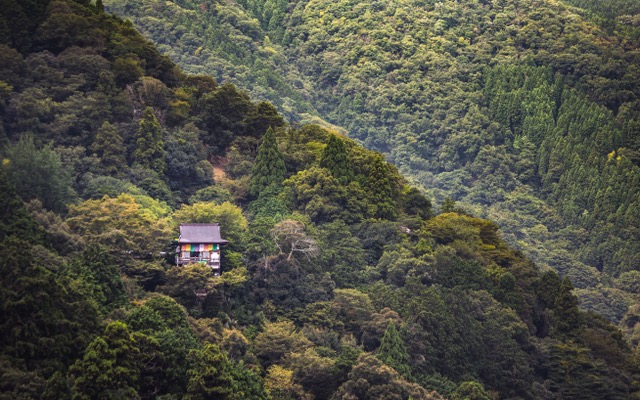
Hut on the Hill, Japan
“The hut is scarcely ten square feet. . . when I lie down, there is just enough room to stretch out my legs.”
Kamo no Chomei
“Listening to the night rain on my roof, I sit comfortably, with my legs stretched out.”
Ryokan
Audio Version:
The Luxury of Simplicity: Coming Home to What Is
Kamo no Chmei was an aristocrat and poet who lived in 12th century Japan. During his years of service to the imperial court in Kyoto, Chomei witnessed vicious struggles between warring clans, raging fires that laid waste to the city, and famines that decimated the population. His vivid descriptions of calamity underscore the agony of life, the futility of power, the folly of human striving. At the age of fifty, having grown weary of society, he retreated to the hills in search of solitude. His seminal work, the Hojoki (record of ten-feet hut), is an account of his simple life in the woods[1]. He lived in a hut just large enough for him to stretch out his legs. As a bureaucrat, Chomei was no stranger to plush quarters. However, in his old age, he preferred this humble abode to the grand palaces of powerful rulers.
Several centuries later, another hermit frolicked the hills of 18th century Japan. Ryokan trained as a monk in the Zen tradition, but renounced priesthood in favour of solitude. A collection of anecdotes from his life depicts a man of good humour, child-like innocence, and deep wisdom[2]. Like Kamo no Chomei, his predecessor six centuries earlier, Ryokan lived in a simple hut and kept few possessions; and like Chomei, Ryokan considered stretching out his legs an exquisite pleasure.
I was curious to read the accounts from these two men, strangers separated by 6 centuries, who both enjoyed the mundane act of straightening their legs. In ancient Japan, furniture was rare. Whereas Europeans had chairs, the Japanese sat cross-legged on tatami mats. Those who have attended meditation retreats, or have visited traditional Japanese homes, will know the relief of uncoiling after hours on the floor, legs folded like pretzels. However, for Chomei and Ryokan, an outstretched leg is unalloyed pleasure, the height of contentment. Without feast and entertainment, these hermits savour the plain delights that elude those whose tastes are blunted by constant stimulus.
In my own life, I have met many faces of misery. I have listened to doctors who earn $300k a year complain about cramped seats on airplanes. I have consoled students who had to settle for an A- rather than an A. Some are caught in a maze of blame and resentment. Others are lost in the miasma of the screen, their attention confiscated by the slop of social media. Many are simply overwhelmed by responsibility: career, parenting, and academics consume their waking hours. Without a minute of stillness, the thin threads of sanity begin to fray, and they lose grip on the vim and verve of life.
People who suffer from the assault of modernity are neither flawed nor deficient; they simply struggle in a culture inimical to human flourishing, a culture that sells the illusion of happiness while delivering discontent. The modern world operates on more. Consider the profusion of electronic gadgets that fill our stores and clog our homes. Notice the proliferation of apps on our smartphones. I am still discovering (and feeling dismayed by) the different apps I need to pay for parking around the city! Never mind the innumerable videos, podcasts, blogs, music, games, and websites that choke the airwaves. This system requires an ever-expanding force to drive economic activity; more production and consumption or the whole thing grinds to a stop. Not to do so would leave mortgages unpaid, families unfed. In a world of never-ending growth, more is not only practical, it is also an existential and ideological imperative.
From an economic point of view, we need more money just to keep pace with inflation. Governments need more money to pay for public services. Businesses need more revenue to keep their employees happy. Corporations need more earnings to keep shareholders happy. Factories produce more to keep consumers happy. This flurry of human activity brightens balance sheets but darkens the skies with pollutants, chokes the waste stream with detritus. A harrowing ride with no apparent off-ramp and no destination in sight, our relentless drive for more portends catastrophe as the environmental crisis undermines the very foundations of civilization. Every species is subject to ecological limits, humans included. Kenneth Boulding once remarked: “anyone who thinks there can be infinite growth in a finite world is either a madman, or an economist.”
On an individual level, the acquisitive drive is often a strategy in response to psychic and existential fears. I have written previously about middle-aged men who acquire expensive cars and motorcycles. “Boys and their toys” is not only a cultural trope, but also a psychological tendency in which one’s recognition of mortality seeks relief in the innocence of youth. Boys play with toy cars at an age when everything is full of promise and possibility. The car is a symbol of all that is good in life, a manifestation of the rewards that life holds in store. When confronted by the inevitability of death, the middle-aged man seeks refuge in youth, only to find himself powerless. Unable to unwind the years, he settles for its proxy: a shiny plaything that reassures him that life is still good. This is not merely a puerile instinct, but a compensatory illusion that fails to satisfy. Because our years are finite, we travel on a one-way street towards oblivion. With fewer years ahead, declining health, diminishing energy, we are all destined to live with less. That this prospect terrifies most people partly explains reflexive urge to seek more.
The propensity toward more creates its unique irony. As it turns out, the solution to scarcity is not plenitude. People strapped for money feel compelled to earn more. The more they earn, the more they spend; thus, the feeling of financial insecurity never dissipates. Similarly, I have seen children complain of boredom despite the laptops, tablets, and video games at their fingertips. All the gadgets seem to magnify rather than alleviate their discontent. I have also watched poor children on the streets of Vietnam seized by hysterical laughter, so delighted were they by an improvised game using nothing but their straw slippers. The contrast could not be starker. Our designs for happiness become the blueprint for our misery.
As a psychotherapist, the people I see every day make me wonder if woe is more inventive than joy. There are a million ways to be miserable, but only a few ways to be happy: appreciation of everything ordinary, loving and caring for others, communion with nature. Happy people don’t seem to need much. They are present to the goodness right under their noses. They hold no dark secret, nor do they practice an esoteric art. Their joy comes from having little rather than much. The contentment they enjoy does not come from external conditions. Rather, they manifest a vitality from the inside out. They are not immune to anxiety and sorrow, but their interiority does not provide harbour to persistent negativity. They weather the ups and downs of life with remarkable poise and equanimity.
What we see in Chomei and Ryokan, who were both happy to simply uncoil their legs, is the pleasure of living an unencumbered life. These are luxuries that only simplicity can afford. Stillness and silence, coupled with an attentive presence, can unscale our eyes and reveal the light that permeates everything.
Many years ago, I got up after a long session of meditation. I was sitting for long periods then – 90 minutes each session. Past the 60 minute mark, my legs would start to cramp while my back began to ache. At the same time, awareness coalesced into a crystalline stillness. Silence imbued everything. The world dissolved into a warmth indistinguishable from the carpet, the walls, the windows that nursed the afternoon sun. I rose from my seat, hobbled to the kitchen and made myself a cup of tea. I watched the steamy water fall into the teapot, felt my eyes grow teary with the tenderness of everything. The whole scene was an emanation of love, which suffused everything. It was the most ordinary moment, nothing remarkable whatsoever. And yet, everything was salient and alive.
That moment is long gone and is no more than a footnote in my memory. I do not live every moment in luminous bliss. Most days, I’m as mindless as a doorknob. However, I still marvel at the oak leaves that blinker the sun. I revel in the peals of birdsong that harken the morning. Few things are as fine as a summer breeze that carries the scent of brine from the sea. The sky remains an exquisite entertainer–how it varies the shapes of clouds, the intensity of light–all without ever repeating itself. To be present to each ordinary moment is to taste heaven itself.
What must we do to attain such blissful state? There must be techniques or methods that will facilitate this inner bliss!
The temptation to take possession of our experience, to wrest it into submission, is the conditioning of creatures who wield their own autonomy. However, if we think there is something to do, something to try in order to get there, then we are already lost. We are not acquiring more skills or techniques. Rather, we are relinquishing the urge to manipulate a desired outcome. When catching a feather, our frantic jabs and swipes will only work against us. Instead, we hold still, extend our hand out and wait patiently. Simplicity is not about attaining something spectacular; it’s about letting go of rigid designs that stand in our way. We are not embarking on a thrilling adventure; we are coming home to what is already here. We practice attentiveness to the present moment while surrendering expectations and outcomes.
As an exercise to illustrate what I’ve described, try sitting down to a cup of coffee or tea. Set the drink down in front of you. Imagine that world peace has arrived, malice and malaise have been abolished, illness and famine forever eradicated. Heaven is here, and eternal bliss starts now. Watch the steam rise from the cup. Can you detect the lyricism of the vapours, the poetry of its movement? Take a moment to smell the cup, bask in the aroma, letting the fragrance fill your nostrils, lungs, bloodstream. Listen to the cup. Does it make a noise? What colour is its silence? Take a sip. Feel the warmth on your lips. Discern the flavours in your mouth. Imagine that you’ve never tasted these flavours before – what textures do they impart on your tongue? Where does the flavour take your thoughts? Do memory gates open in response to the flavour? What emotional valences follow the flavours? Delve deep into all these sensory contacts, as if each sip contains an ocean.
To drink a cup of coffee like this is to arrive at life’s essence. This, and simply this. Nothing else required. In the fullness of all that is, we need not live in pursuit of happiness; we discover ourselves already happy.
Recently, I learned the tragic story of Boban Jokovic, a Serbian basketball player who in anger smashed his head against a concrete block after fouling out of a game. He instantly broke the bones in his neck and was paralyzed for life. Lamenting this tragedy, Mark Nepo asks: “Are we so out of touch with the miracle of life that our aspirations for perfection simply turn us on ourselves?” Following Nepo, I posit that we are all, to varying degrees, out of touch with the miracle of life. Our self-destructive methods might appear benign by comparison, but we court suffering nevertheless. We chase after materials, fame, wealth, sensual pleasure, entertainment, psychoactive drugs, all to avoid facing the raw, unbearable majesty of life. Further, we spin elaborate tales of our own despondency, thus galvanizing the sense of a wounded self. Our bodies remain mobile, but our psyches are trapped in a way that is analogous to paralysis.
To return to simplicity is to reclaim our original state. We are in essence whole and awake. The external conditions that shape our days need not obscure our fundamental inheritance. Simplicity provides the very condition for the recognition of this wholeness; the more we recognize this wholeness, the more we want to nurture the simplicity in our lives. The best of all: the healing power of simplicity is available to all without discrimination. If you can be content with the pleasure of stretching out your legs, you will join the ranks of ancient sages, Kamo no Chomei and Ryokan among them.
[1] Kamo no Chomei, Hojoki: A Buddhist Reflection on Solitude: Imperfection and Transcendence – Bilingual English and Japanese Texts with Free Online Audio Recordings, trans. Matthew Stavros, with Reginald Jackson (Tuttle Publishing, 2024).
[2] Kazuaki Tanahashi, Sky Above, Great Wind: The Life and Poetry of Zen Master Ryokan (Shambhala, 2012).
Thank you. I love this article. Reading it brings me back to the simplicity of the moment. Feet on the floor, heart soft in a wordless aching. I let go of the struggle for the right or best thing and agree to make life easier by keeping things simple.
Thank you for your thoughtful response.
…Dave
David, your Field Note leaves me with different ways to imagine struggle and joy.
Karen, much appreciated in struggle and in joy.
…Dave